If you are a bit into the coffee scene, you will probably have heard about good coffee and its relation with elevation or altitude. Let’s take a closer look at this and find out what it is all about and why higher up the mountain means better coffee.
As we have seen before, when speaking about varieties and altitude, Arabica coffees are mostly grown above 500 meters above sea-level and can reach heights of about 2000+ meters. Some regions and countries have technical terms that identify high-elevation lots. For instance, in Central America coffee grown above 1200 mts is called “hard bean,” and above 1500 mts as “strictly hard bean.”, Mexico uses “altura” for high-grown coffee, and Papua New Guinea calls its coffee from the highest farms as “Mile High.”
Although altitude is just one of dozens of factors that affect the taste of the coffee, it is one of the most important ones. Altitude has an important impact on the size, shape and taste of the beans. One could say that the higher the altitude, the harder it is for a plant to thrive. While at first look this seems like a negative, it’s actually beneficial for the plants and their fruits that do survive. It takes longer for the coffee plants (and beans in the cherries) to mature and that helps produce beans with special and typical flavors as it gives the sugars more time to develop. The plants produce coffee beans that are more dense and hard (hence hard bean).
How could you identify this high grown coffee? The (green) beans should have a closed fissure line that might be like a zig-zag or slightly skewed. On the other hand, lower elevation coffee beans will generally be less dense, with a semi-open fissure. Probably the bean density will be the best signal for determining the altitude of the coffee and that is not something you can determine easily so mostly you will have to rely on the information the supplier provides.
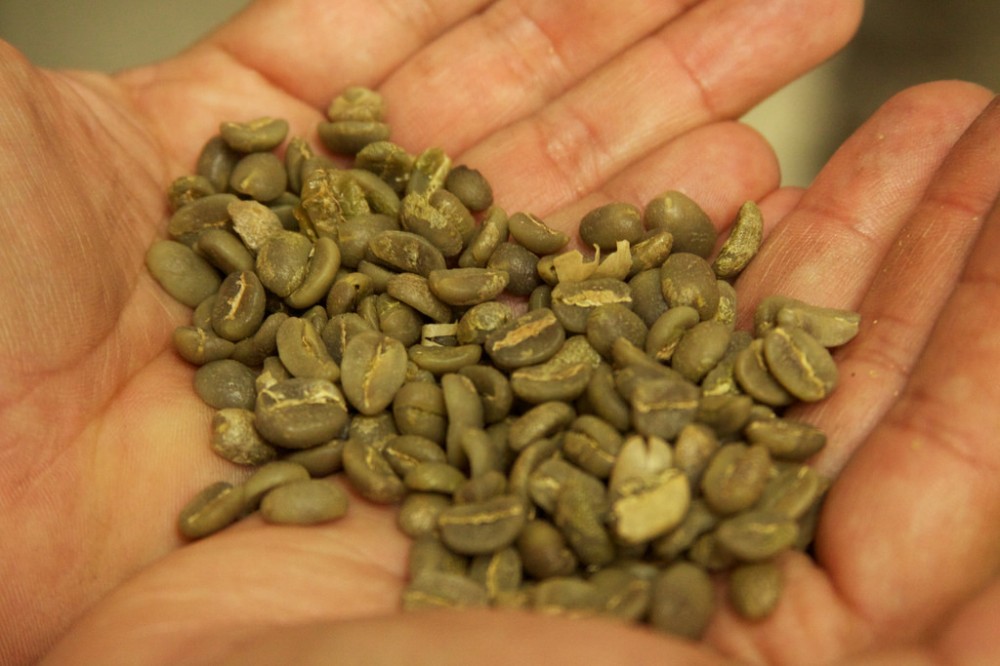
High grown green coffee
However, besides altitude, latitude might be an important factor as well; as the distance from the equator increases, temperatures at a given elevation decrease. So, 2500 feet above sea level in Hawaii is a much cooler climate than 2500 feet above sea level in Colombia. It has been observed that: “Whereas coffee grown in Hawaii at that elevation can be acidy and complex, it is rarely found to be so in Colombia, even though the elevation is the same”1.
But generally speaking we can observe the following:
Below 900 mts: the coffees are simple in flavor and mild (often a bit bland and/or earthy). The coffee plant isn’t subjected to much stress at these altitudes and has an abundance of water, meaning the coffee cherries get nice and fat, which dilutes their flavor. The best known exception at this altitude is the famed Hawaiian Kona coffee, which thrives at 2,000 feet.
900 – 1200 mts: the coffees are taking on both sweeter and smoother flavors with a low acidity.
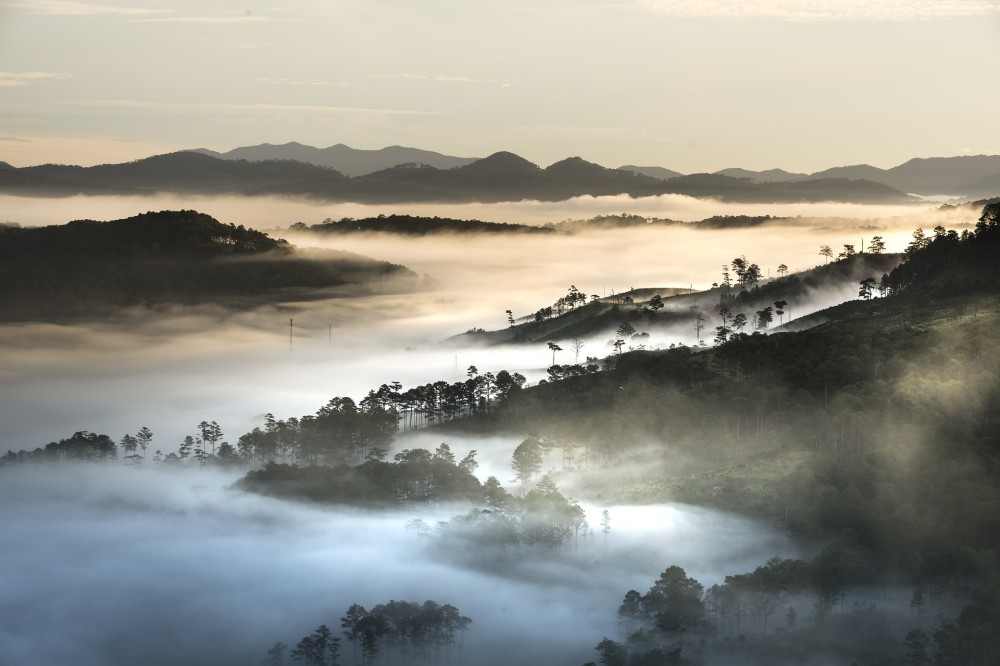
1200 – 1500 mts: now we are getting into the realm of the better coffees as this is the altitude at which the best Arabica beans in the world are grown at. Acidity is higher. The flavor profiles at this altitude can be described as notes of citrus, nuts, vanilla, and chocolate.
1500 mts and above: Coffee grown at and above this altitude are known as “very high altitude coffees” with high acidity. The flavors typically are fruity, spicy, floral, and even wine-like.
photo credit: mckaysavage Colombia - Coffee Triangle 021 - coffee plantation tour via photopin (license)
2017