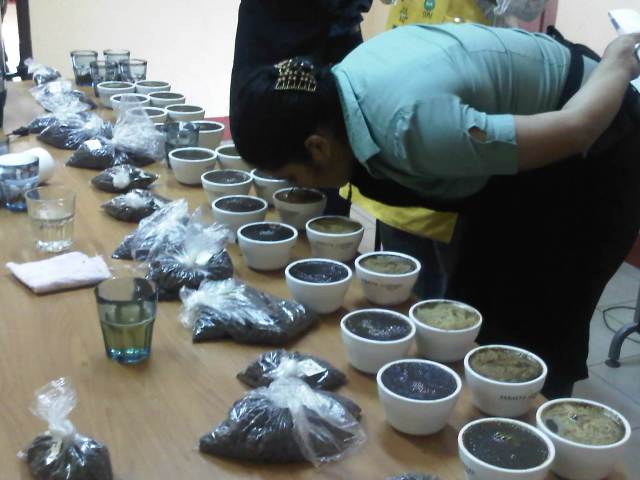
A nice cup of coffee, that’s what I need right now, but … How does my coffee actually taste? Trying to describe the kind of coffee you like normally does not go beyond warm, strong and dark. Do you actually think about how your coffee tastes? Or did you ever try to describe it? Tasting coffee (or cupping) is a lot like tasting wine and there is a lot to say about it. Let’s start today with taste.
Coffee cuppingi consists of six steps which evaluate a coffee’s fragrance, aroma, taste, acidity, nose, aftertaste, and body (we’ll see about that in a later article). But let’s not get too specific at this moment and just call it taste or flavor for the moment. Professional coffee cuppers may describe flavors detected by the tongue (primary tastes), and flavors detected through the nose (secondary tastes). Primary tastes are salty, sweet, sour, and bitter. The overall taste is likely to be a combination of these.
Salty and sweet are easy ones, so let´s take a look at the others and start with bitterness.
Bitterness
For many years, food scientists believed that caffeine was the main source of bitterness in coffee. While it’s true that pure caffeine has a bitter taste, there is so little of it in an average cup of coffee that it contributes only a very small amount to the bitterness. When we talk about bitterness we think of a harsh, generally unpleasant taste detected mostly in the back of the tongue. Extra dark roasted coffees generally are quite bitter.
Sourness
If a coffee is sour there is an excessively sharp, biting and unpleasant flavor (such as vinegar or acetic acid). Sour or soury flavors are sometimes associated with the aroma of fermented coffee. A sour taste can be caused by overripe or already fermenting cherries, or by improper fermentation where yeasts and alcohol form vinegar-like acids. To avoid this defect, coffee still in its parchment (husk) is washed immediately after fermentation when the parchment coffee is no longer slimy and has a rough texture. Soury flavors are often confused with acidity, which is the slightly tangy sensation associated with bright coffee flavors.
Acidity
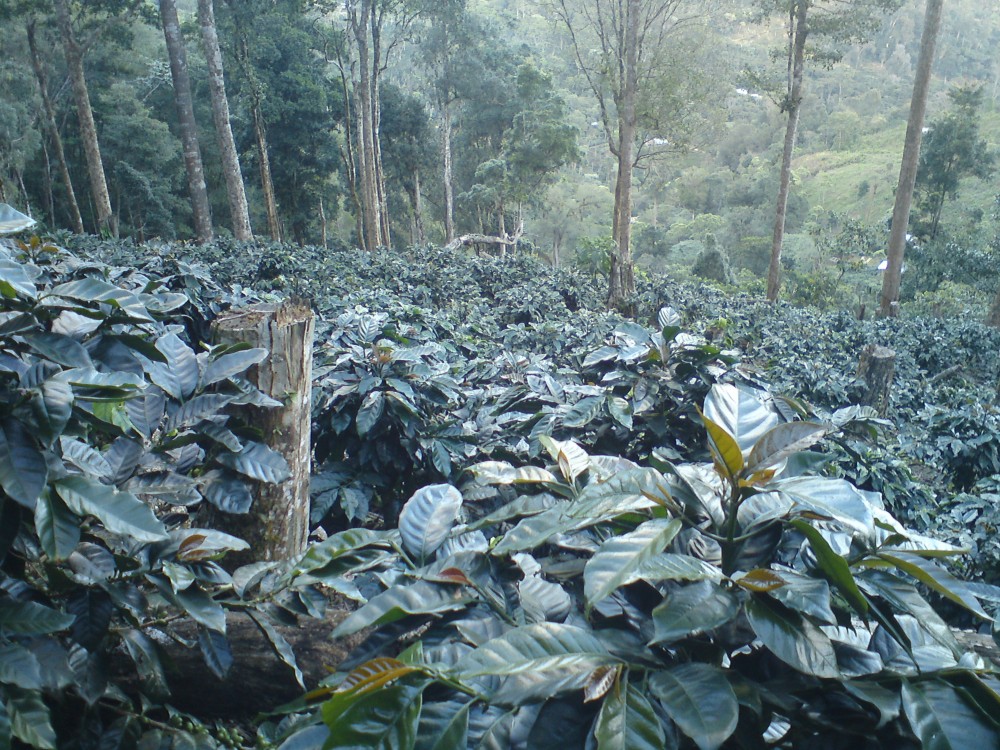
O ne of the most common terms you are likely to encounter is acidity. Acidity has nothing to do with the amount of acid (coffee is quite neutral with a pH between 5 and 6) but has to do with fruity, sweetly or wine-like flavors that go with many high grown Arabica coffees. This opposed to robusta coffees that normally have a low acidity and have a stronger, harsher taste, with a grain-like overtone and peanut like aftertaste. It is said that acidity in coffee brings out all the other qualities but it is also true that acidity can ruin a coffee. So ultimately it comes down to personal tastes and some all-arabica blends are too high and floral for some of us and some of the rich, dark harshness of robusta can be a good thing in a blend.
Let’s see what the cuppers’ manifesto has to say about acidity: “But acidity must be accompanied by flavor. The more acidity you have, the more flavor you need. Imagine a pineapple with all the acidity but no flavor, who would want to eat it? So balance between acidity and flavor is important. In some coffee growing regions, low acidity is typical and helps more subtle flavors emerge. This is true of coffees that are “naturally” dried and also of some of the great African coffees of Yemen and Ethiopia. But for Central and South American coffees, acidity is essential.” Other ways to describe acidity are brightness, liveliness and savoryness.
In the next article we will see what fragrance, aroma, taste, acidity, nose, aftertaste, and body are all about.
2017