You want to cup, but you don’t have the necessary equipment, you do not roast your own coffee and all you have are some cups and spoons. Most of us will be in this situation. There is no right or wrong way of doing a cupping session, so let’s just keep it simple and take a look at the bare basics to do some cupping ourselves.
Basically cupping is about tasting different coffees prepared the same way and at the same moment. So today we will focus on the crucial tasting moments. That is, we’ll not focus on how and when you should take notes, the necessary equipment, what kinds of coffees to evaluate and all possible descriptions, but just a basic setup to get you started.
 Depositphotos – many cups of coffee
Of course you will need to buy coffee. Just choose 2 different coffees. Try to do it with a light toast and a normal drip coffee size grind. Remember we are just going to try out and concentrate on the cupping techniques. For the moment let’s just forget about all the preparations and set up your table with 3 cups per coffee (ideally those would be 6 oz cups). In the center of the table place a cup of room temperature water and an empty cup containing some spoons. You will have to spit out the coffee you are cupping, so you could use a bucket for that.
Put some of the sample coffees on a small plate to look at it and take a sniff. The smell of the grounds on the plate is referred to as the fragrance.
It’s time to prepare the coffee samples. Put 2 tablespoons of coffee in a 6 oz cup (you should use 55 grams per liter water). Boil the water and leave it to cool to about 80 – 85 degrees C.
Add the hot water to the cups with the coffee and to the cup containing the spoons (we want the spoons to have the same temperature as the cups containing the coffee). Smell each cup without disturbing it and get your first impression (you should/could write them down) of the coffee aroma.
Now we have arrived at one of the most crucial moments of the cupping exercise. The coffee will float on the water and form a crust. Leave it there for 1 to 2 minutes, and then break the crust with one of the preheated spoons (the water should still be quite hot): put your nose directly over the cup, push the coffee down and sniff its aroma. This is the most potent burst of aroma you will have during cupping.
After this, stir the cup a little to make sure all of the coffee is covered in water and to help the coffee sink to the bottom of the cup. Take out any grounds that continue to float, rinse your spoon in hot water and move to the next sample.
When you are done sniffing and after the coffee has cooled down a bit, we have come to another crucial moment of cupping: the slurping. This will take quite some practice to do it right and you might end up with some coffee in your nose (at least, I did)!
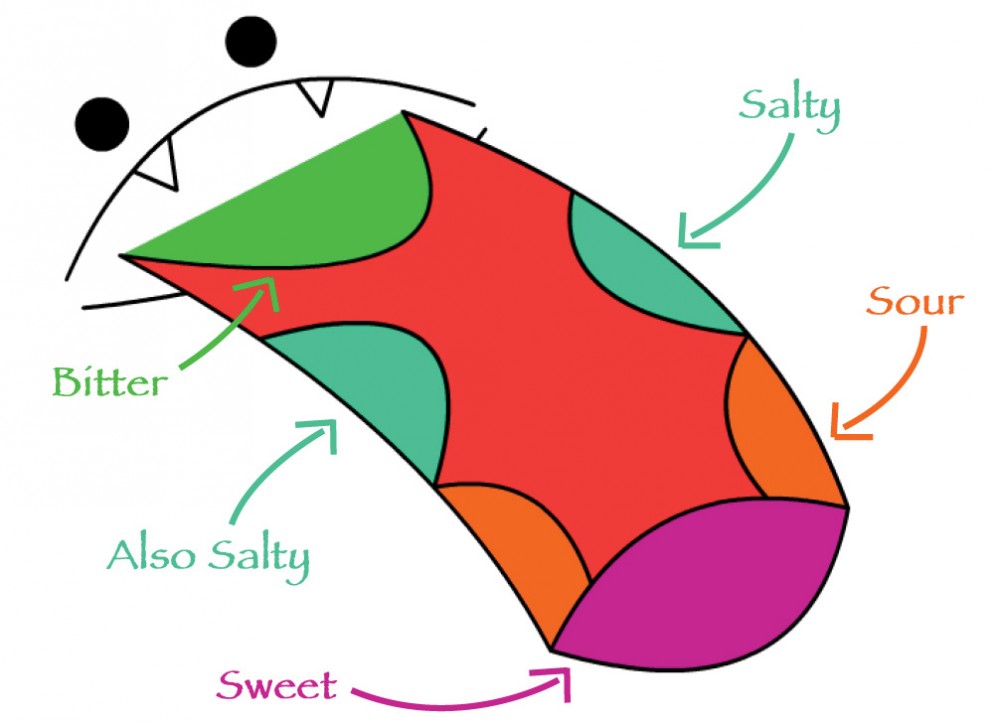
You have to take some coffee into the spoon and slurp the coffee strongly to aspirate it over the entire tongue! Aspirate strongly because you will have to cover the entire tongue evenly. Some droplets of coffee have to get into the throat and into the nasal passage. Spit out the coffee.
Remember that the flavor observed is a result of aromatic compounds present in the coffee and you need your nose for this (to prove this, just plug your nose while drinking coffee and it will likely taste like any simple instant coffee).
Normally you would now write down your observations of taste, acidity, aftertaste and body, but as we are just trying, we will move to the next cup and try to compare the different cups. Wait until the coffee in each cup cools down to just above room temperature and take another sip (it is often possible to detect new flavors). The best coffees will have good and different characteristics at both temperatures.
That wasn’t too difficult, was it? Using a quite simple setup, we now have some basic idea of the fragrance, aroma and flavor of the samples. You could try to do the same thing with a friend or just keep trying until you think you’ve got it right, but remember: it should be fun!
2017