So now we know that the two main varieties, Robusta and Arabica differ in taste, growing conditions and price. Let’s talk a bit more about taste. Arabica beans tend to have a sweeter, softer taste, with tones of sugar, fruit, and berries. Their acidity is higher, with that winey taste that characterizes coffee with excellent acidity. Robusta, however, has a stronger, harsher taste, with a grain-like overtone and peanutty aftertaste. Some robustas, however, are of high quality and valued especially in espressos for their deep flavor and good crema. It’s a fact that all the best tasting coffee is made from Arabica beans which are naturally mild and aromatic, with a rich round pallet and imbued with subtle and varied flavors.
Arabica, then, ends up being pricier, of course. Most cheap supermarket coffee is exclusively robusta, and instant and cheap ground coffees are certainly robusta. You can still find Arabica in the grocery store, but just because it's labeled Arabica does not mean it's of high quality. Ultimately it's a question of personal taste. Some all-arabica blends are too high and floral for us; some of the rich, dark harshness of robusta can be a good thing in a blend. Just remember that robusta has twice as much caffeine as arabica, too, when choosing a coffee blend. If you want to skip most of the caffeine.
Robusta: 1.8 – 4.0% caffeine, Arabica: 0.9-1.4% caffeine
The name “Arabica” isn’t in and of itself an indicator of final beverage quality. Arabica coffee is mostly shade grown in the mountains above 600 meters, and therefore more difficult to cultivate and harvest than plantation grown Robusta. The greatest coffees in the world are Arabica, but there are lots of inferior Arabica coffees which are not suitable for specialty coffees. Good horticultural practices could produce better quality Robusta but one would not expect to find any Robusta that compares favorably to good Arabica.
Interestingly, contrary to popular culture, darker roasted coffee beans have less caffeine than the same bean roasted light. The idea that “strong” equates to dark is true only of flavor, better described as “bitter”, not to the coffee’s caffeine content. Even today many coffee mavens equate dark/burned to superior quality, which is easily disproved through a blind taste test. Another interesting fact for expresso lovers: the best Italian espressos are a blend of Arabica and Robusta beans (we’ll see what makes a good expresso in a later article).
So resuming, what are the main differences between Robusta and Arabica:
From a price perspective, green beans of Robusta is about half the price of Arabica green beans on the commodity market. (Robusta vs. Arabica). Robusta is easier to tend to on the farm, has a higher yield and is less sensitive to insects - the extra caffeine is a chemical defense for the coffee seed as the quantity in the Robusta is toxic to bugs.
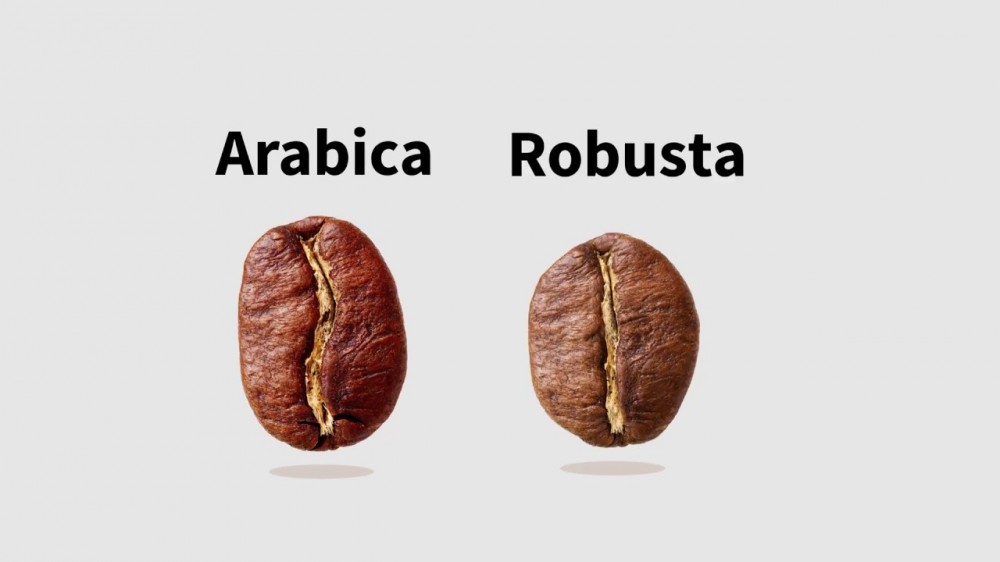
The Shape and plant height: Robusta beans are much more circular, whereas Arabica are more oval. Arabica usually grows between 2.5 – 4.5 meters compared to the 4.5 – 6 meter height of Robusta.
The most commonly known factor: Taste. Often Robusta has its taste described as burnt tires or rubbery, or just bitter. One reason that the taste isn't as good for Robusta is that it has more caffeine compared to Arabica, and caffeine carries a bitter taste. Arabica contains almost 60% more lipids and almost twice the concentration of sugar than Robusta. This factor also probably has a big impact on why we prefer the taste of Arabica.
Now, before we go on about varieties, sub-varieties, cultivars etcetera, let’s just stick with tasting or cupping as it is called. In all coffee-producing and processing countries there are laboratories for cupping coffee (preparing green coffee as to describe the tastes and aromas of the brewed coffee) and in the next article we will see what that is all about.
2017