A real coffee aficionado roasts his own coffee. Or should. But, anyway, you should at least know a few things about roasting if you are interested in coffees. It all starts of course with green beans. Remember that what we call coffee beans actually is the inside of the 2 seeds of the coffee cherrie that have been roasted. Green coffee beans are soft, almost without taste and smell like hay. Nowadays you can buy them easily online.
In its green form, coffee has a liquid content between 10-12.5% but after the roasting process this drops about a third and at the same time the bean’s volume increases 100%. Coffee roasting is a fairly complex process that applies heat to green coffee to manipulate sugars, proteins and acids, to obtain a certain flavor, acidity, aftertaste and body. The major difference between coffee roasts comes from several chemical reactions that occur inside the coffee beans at different temperatures and the time the beans are exposed to those temperatures.
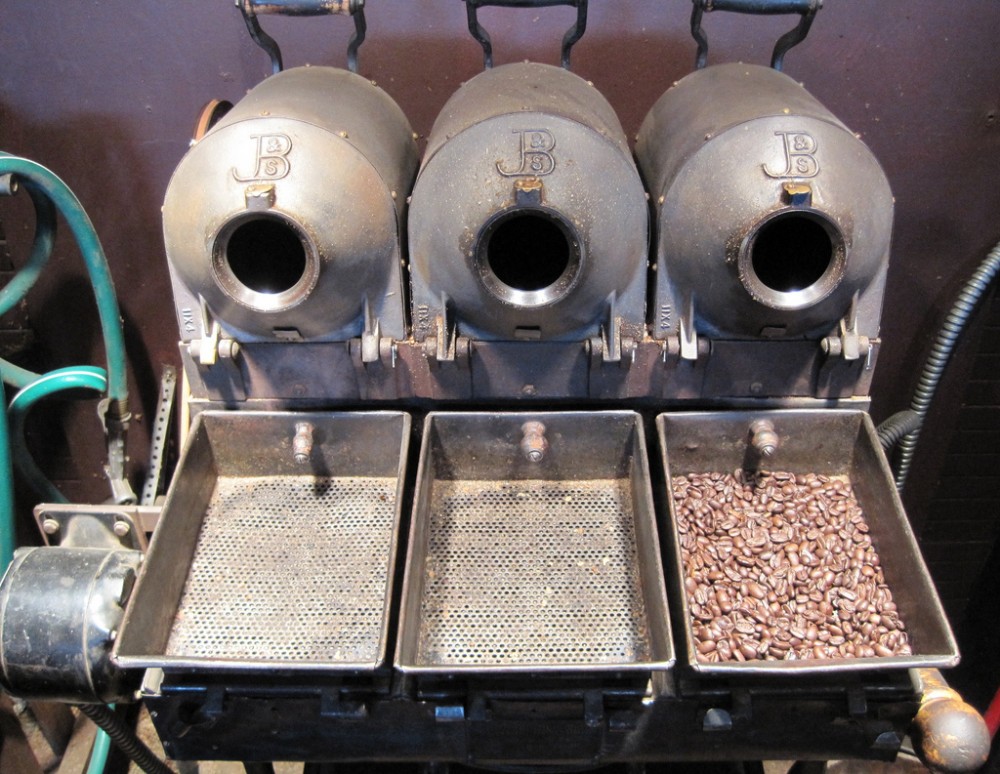
Coffee – roasting for cupping
In another article I will guide you through the process of roasting your own coffee, but for now let’s take a look at what actually happens with the beans and how we can turn these green, almost tasteless seeds into something we recognize as coffee beans.
When you start roasting you see a significant drop in temperature as the beans rapidly takes in the heat of its environment and the evaporation of water starts. This first phase of roasting is completely endothermic (heat absorbing) and colored plant compounds begin to decompose so the bean changes from a green to a more yellow color. You can smell this as well, the hay smell turns into something like nuts or popcorn.
The first, and maybe most important, chemical reaction that starts is called the Maillard reaction. At temperatures from 150-200°C, carbonyl groups from the sugars and amino groups from the proteins react and combine making aroma and flavor compounds. You can see this Maillard reaction in almost all cooking.
The second process is called the caramelization of the beans. From 170-200°C the sugars of the beans get brown and releases aromatic and acidic compounds. If you roast the coffee too lightly, the bitter tasting compounds won’t degrade.
At temperatures around 205°C things get interesting when you are watching because the water inside the bean vaporizes, the bean gets visibly bigger and cracks (you can hear this). This first crack (or pop) makes the bean double in size. The beans are changing from yellow to a light brown color. At this point, the bean loses about 5% of its weight from water loss.
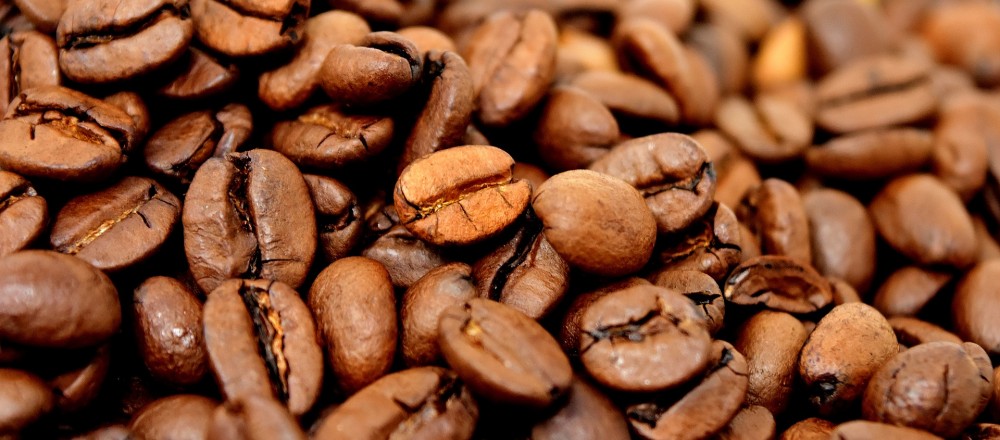
Light roast
At approximately 220°C, the heat causes a chemical change inside the bean, leading to the release of carbon dioxide. This process is called pyrolysis. The color changes to a medium brown and the bean loses 13% of its weight.
Pyrolysis continues as temperatures reach 225-230°C, causing the second crack or pop in the bean. That second crack is the cellulose in the cell wall of the bean breaking apart. The bean is now medium-dark brown in color and has an oily sheen. It’s during this step where the aromatic compounds are released, contributing to coffee’s classic flavor.
If you keep roasting at this stage (darker roasts), carbonization starts and the coffee will eventually burn. Carbon is developing as sugars and other components are breaking down and burning.
The bean's original flavors as determined by a bean's environmental, geographical origin or variety are best appreciated by light and medium roasts. Darker roasts taste less like their original bean and are more defined by the flavor the roasting process gives it.
The art of roasting is in determining how much time to take at each stage and temperature and the decision on what color (and therefore taste) best suits the bean. Each kind of coffee, or even batch of coffee, has its own “roasting profile”: you take notes at each stage of time and temperature and in a very scientific manner (try and err) you keep going until you find your perfect profile.
2017