Let’s start with varieties. There are 124 known coffee species and once roasted, pretty much all coffee beans look the same. When it comes to your daily cup though, there are really only two species that matter: Arabica and Robusta. We will start with a description of these two types or main varieties of coffee. Much like wine, coffee flavor is affected by soil, altitude and other climatic factors so what's the difference between Arabica and Robusta? Firstly let’s see how and where they are grown.
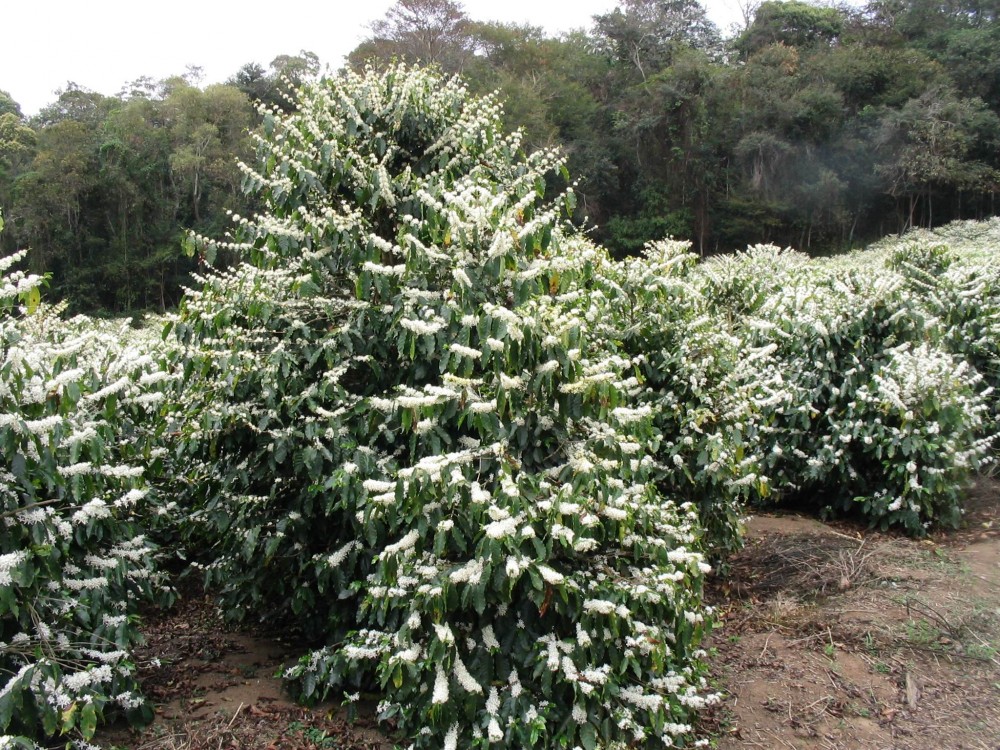
Trees of the Arabica species under free growth can reach between 4-6 meters high with wavy leaves that can measure between 10-15 x 5-10 cm. Under good field conditions young plants can begin to bloom between 12-15 months and produce their first crop about three years after planting. The fruit of the coffee tree takes between 6 and 9 months to reach its optimum state of maturity. Arabica coffee is normally grown at altitudes between 600-2100 meters above sea level but plantations grow it as low as at sea level. The optimum temperature is between 15-24 ° C. This species has the potential to produce coffees with clean cups, sweet, fruity notes, and with a higher acidity. It is important to remember that only 20% of the Arabicas of the Arabica variety that are cultivated in the world are considered as High Quality Coffees or Special Coffees. The percentage of caffeine in Arabica coffees has an average of 1.2%. The largest producer of Arabica coffee in the world is Brazil.
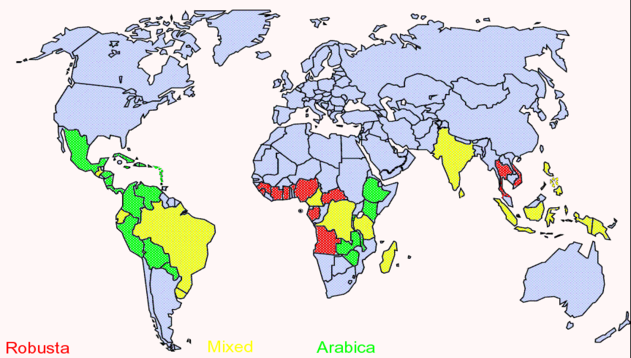
World distribution of Arabica and Robusta coffee plants. Originally introduced in the 15th century and first grown in Ethiopia, coffee is now grown in over 70 countries throughout the tropics, the area of the planet between the Tropics of Cancer and Capricorn.
See https://dmt-sbi3u.wikispaces.com/Coffea+Arabica
Robusta is grown almost exclusively in the Eastern Hemisphere, primarily in Africa and Indonesia. Arabica is also grown in Africa and Papua New Guinea, but it's grown dominantly in Latin America. Some countries, like Brazil and India, produce both varieties.
Robusta trees can reach between 8 and 12 meters (double of the Arabica trees), with leaves much longer and corrugated than those of Arabica and can be cultivated between 100-700 meters above sea level and an ambient temperature between 24-30 ° C. In order for its fruit to ripen it can take between 9-11 months after flowering. In general they are plants more resistant to diseases, pests and adverse weather conditions. This species produces stronger cups, less aromatic, rough and gritty notes. The caffeine content is double that in the Arabica spice generally with 2.2%. In general the price of sturdy coffees is considerably lower than those of the Arabica variety. The largest producer of robust coffee in the world is Vietnam.
Robustas, are easier to grow. They can grow better at lower altitudes than Arabicas, and they are less vulnerable to pests and weather conditions. They produce fruit much more quickly than the Arabicas, which need several years to come to maturity, and they yield more crop per tree. Robusta is more disease and insect resistant than Arabica because Robusta plants produce as much as three times the amount of caffeine as Arabica plants. The extra caffeine helps protect the Robusta coffee plants from pests because caffeine is a powerful insecticide and anti-microbial agent. So the choice to grow and use Robusta is driven by economic decisions, not by quality concerns.
2017