No, I am not going to write about worms, coffee plants and insecticides; I’ll leave that for another time. Let’s talk about how beneficial worms can be in a coffee farm. First of all, you need them in the soil of course, but farmers that do wet-milling have another big advantage; they can use the pulp as a free fertilizer and use worms as their working force!
Let’s see how that works. While harvesting the farmers start wet-milling the coffee cherries. That leaves them with 3 quite polluting sub products: the pulp, the mucielage and the washing water. The mucielage can be used during fermentation (to speed it up when needed) and the water can be used as fertilizer or as insecticide. And finally, coffee pulp can also be used as fertilizer. As the pulp represents from 40 to 50%% of the fresh weight of the fruit, it constitutes quite a problem in coffee producing countries when it is just thrown into the rivers. For instance, in some Central American cities drinking water is severely affected at harvest time (it actually has a brown color and tastes sweet and stinks). Smart, environmentally conscientious, farmers have come up with several ways how the pulp, that can severely pollute water streams in coffee-producing regions, can be used as a fertilizer
Now first of all, you can just throw the pulp at the feet of the plants instead of washing it away to the river. That is fast, easy and cheap fertilizing. Secondly, you can process it or compost it. Composting takes a bit more time and work but it is easy and cheap as well: basically you just need a wooden box or a barrel (cut vertically in half), throw in your organic wastes, ashes and some water so now and then and after some months you got an excellent fertilizer. Of course it is a bit more complicated, but you got the idea.
And then of course, you can do something that is called vermiculture. Wikipedia tells us that: “Vermicompost (vermiculture) is the product of the composting process using various species of worms, usually red wigglers, white worms, and other earthworms, to create a mixture of decomposing vegetable or food waste, bedding materials, and vermicast. Vermicast (also called worm castings, worm humus, worm manure, or worm feces) is the end-product of the breakdown of organic matter by earthworms.”
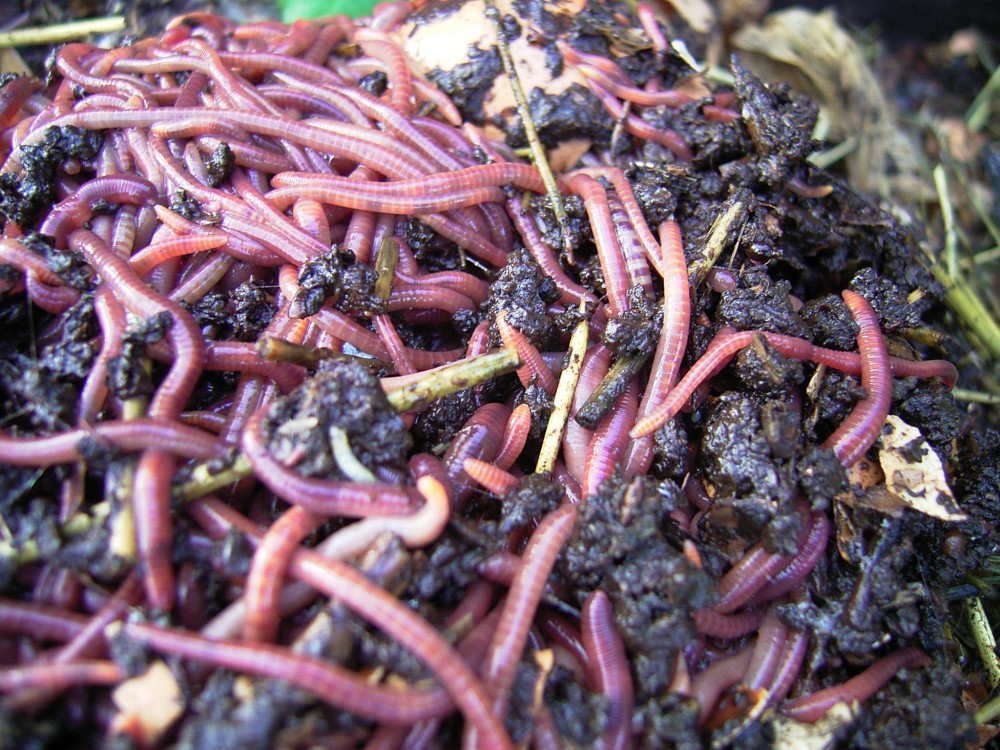 Worm bin (https://www.flickr.com/photos/jlevine/)
One of the species most often used for composting is the red wiggler or tiger worm (Eisenia fetida), sometimes called the red Californian worm as well. This worm has a very high production AND reproduction rate. The worm is nourished with any type of organic substance that has overcome its warming state as a result of its decomposition and subsequent fermentation, but in coffee producing countries we mostly see bovine, rabbit or goat manure, sugarcane bagasse, banana peel, and, of course, coffee pulp being used. This results in a very good compost and at the same time it is environmentally and economically very sound. The farmers don’t need to buy or need to buy less fertilizer and they can sell the humus and excess worms, usually at a very good price.
And there are other uses: I have seen some farmer’s wives sell the moisture that is collected at the base of the tank as lombri-pipi (worm piss) and get good prices for it and some farmers even suggested they could use it to make lombri-burgers …
You can try to set up their own worm bin at home so they can compost your food scraps and leftovers. Not everything can be used and to begin you could just try with a mix of vegetable and fruit waste (do not use a lot of citrus fruits), some bread, pasta, rice or potatoes, some aged animal manure, shredded newspaper, some egg shells, coffee grounds and tea bags. Do not use human or pet waste, dairy products, oils, grease or meat and you should of course avoid all non-biodegradable materials and chemicals. Do not assume however that the worms feed directly on the waste materials themselves. They feed on rotting materials and don’t start processing the material until sufficient microbial colonization has occurred.
Personally I do not have the space or time to compost but I do use my coffee grounds. Besides being able to use it as part of your skin and hair regimen, you can use it, as I do, for your plants at home, in the house and in the garden. Try it out and you will see it is an excellent fertilizer!
2017