We have been looking into tastes and flavors, and the relation with varieties and altitude, but there still are a lot of other factors involved when talking about quality and taste. We know that coffee is grown in tropical zones all over the world at different altitudes and using different varieties, all with their special and typical flavors. All the places that are known for having great coffees are mountainous, wet, and located in the tropical or sub-tropical regions with past or current volcanic activity. Coffee can be grown on lots of soils but the ideal types are fertile volcanic red earth or deep sandy soils. However, these soils only cover around 1% of the ice-free surface area of the earth.
For coffee trees to grow it is important that the soil is well draining which makes heavy clay or heavy sandy soils inappropriate. Volcanic soils have a good structure and texture for coffee growth (as well as for tea or tobacco for instance) as they often contain small pockets of air that makes them porous and ideal for retaining water. Shallow groundwater is bad for coffee growing as it can rot the roots that are 3 to 5 meters deep. Roots of coffee plants have a high oxygen demand so good drainage is essential, thus it is no surprise that the most famous coffee growing regions are in areas of past and current volcanic activity, such as Central America, Hawaii and Indonesia. There are some general observations we can make about flavors of the coffees of each of the major coffee regions:
Central America and Colombia: These are the famous coffees, especially in the United States. Colombia is widely known as a quality coffee producing country (mostly because Colombia is one of the few countries that only grows Arabica beans), but actually Central American coffees are widely considered to have the best combination of body and acidity. This region regularly delivers award winning coffees and some of the highest prices ever paid were for coffee from Central America. Central America, in general, produces a very consistent Arabica coffee. There are distinct differences from country to country as you move south from Mexico to Colombia. Colombian, Guatemalan, Costa Rican and Panamanian coffees are popular, but I would recommend you to try out some flavors from the other countries as well, especially Nicaragua, Honduras and El Salvador. Also, there are different micro-climates in each country (and even at farm level) producing distinctly different coffees and profiles. Flavors are mostly fairly light and well-balanced, a bit acidic, with good fruity undertones.
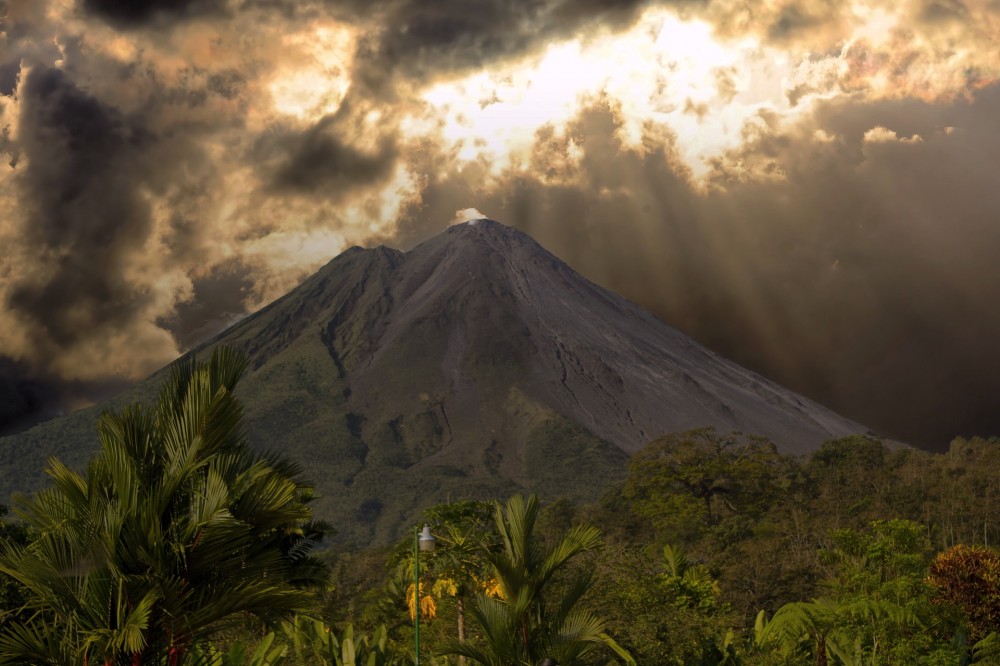
Costa Rican Volcano
Hawaii - The location and island climate provides good growing conditions and its volcanos are well known. For instance, on the side of Kilauea Volcano on the Big Island of Hawaii you can find several quality coffee producing estates. Hawaiian coffees have a sweet scent and a mild, floral mellowness.
African coffees - Here we can find some famous coffees as well in volcanic regions. Ethiopia is the country where coffee plants originally came from. Here they have more biodiversity than most other growing regions (except Brazil). Many of their coffees are described as syrupy, with strong overtones of strawberry or blueberry. Kenya features bold-tasting coffees that some people find tropical, with a black-currant quality and sometimes even a tomato-like acidity.
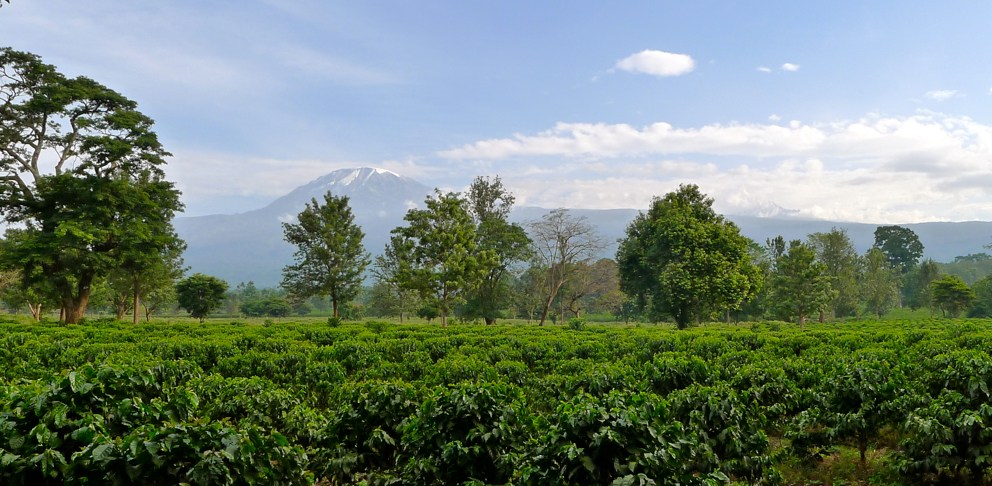
Kilimanjaro coffee
Indonesia: Although Indonesia (as well as Brazil) is producing for less demanding markets, there are still very nice coffees to be found. For example, the highland plateau between the volcanoes of Batukaru and Agung is the main coffee growing area of Bali. Ashes from these volcanoes have created especially fertile soils for good coffees, but actually Indonesian volcanoes are a little bit too active. Indonesian coffees can be found on a lot of islands, as on Java, a well-known term that is even used as a synonym for coffee in some countries. Indonesian coffees generally have a dark earthy or smoky quality with a long aftertaste reminiscent of unsweetened cocoa.
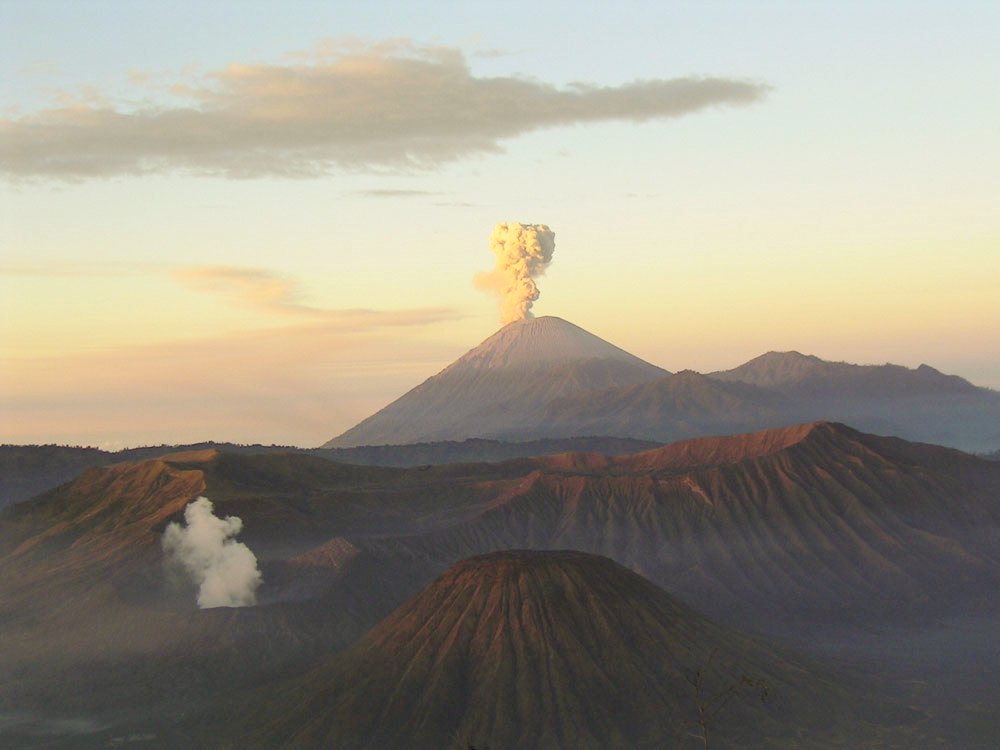
Java: By Jan-Pieter Nap - CC BY-SA 3.0
Brazil: Now, we couldn’t end without mentioning Brazilian coffees. Although Brazilian coffees consist mostly of robusta beans (with a heavy mouth-feel, sometimes with chocolatey overtones that are often used in darker roasts for many grocery store and espresso blends), there are some other, interesting coffees as well. The Brazilian Highlands are an extensive region, covering most of the eastern, southern and central portions of Brazil. Ancient lava flows gave birth to much of the region. The time of volcanic activity is long past and erosion has also played a large part but nevertheless, there are some interesting coffees to be found. Brazil has one sleeping volcano, Trindade, which lies about 1100 km from the south east coast, which is the main Arabica region of Brazil.
2017